


Application
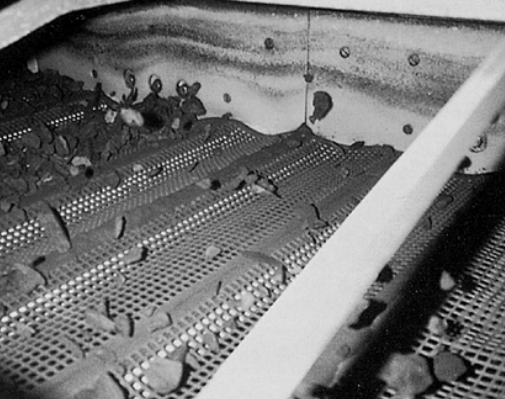
The Minealytics Screen Efficiency Neural model helps to quantify how effectively a screening operation separates material. The model typically considers factors like the size distribution of the feed material, the mesh size of the screen, material properties, and operational parameters such as feed rate and screen motion. The model helps identify the optimal operating conditions that maximise the throughput of the desired product, ensuring that the processing capacity is utilised effectively (the screen is neither overloaded nor under-utilised under different granularities).
The abnormal operation of fines reporting to oversize can also be predicted by the neural model, minimising fines contamination.
Integrating screen efficiency modelling into real-time control systems allows for dynamic adjustments to operational parameters (such as feed rate, vibration amplitude, and screen angle) in response to changes in feed characteristics or desired output.
Benefits
- The Minealytics Screen Efficiency Neural Model can be used to continuously optimise the screening process by predicting discharge rates and, in closed loop, making real-time decisions and adjustments to the feeder speed.
- By understanding the efficiency of each screen, maintenance can be scheduled proactively, reducing downtime.
- The model can adapt to changes in ore characteristics or operational goals, providing a flexible tool for process optimisation.
- By leveraging our neural networks for screen efficiency modelling, mining operations can achieve higher efficiency, better predict and manage screen wear and maintenance, and optimise the entire screening process based on real-time data and predictive insights.
Technology
The screen-efficiency model is evaluated against measured efficiency, split performance and the operating variables that influence them. Inputs can include feed rate, screen current, water addition, aperture condition and particle-size measurements. The implementation may use a time-series neural model or a hybrid process model. The product is the validated efficiency estimate and the control or maintenance response around it, not a fixed network architecture.
Operating mode
Configured per site
The approved operating mode depends on the site, available data, validation results and safety case. A capability may begin as monitoring or advice, then progress to supervised or closed-loop control. Existing PLC, DCS and safety interlocks remain the final authority on what equipment can do.
Read about deployment and assurance